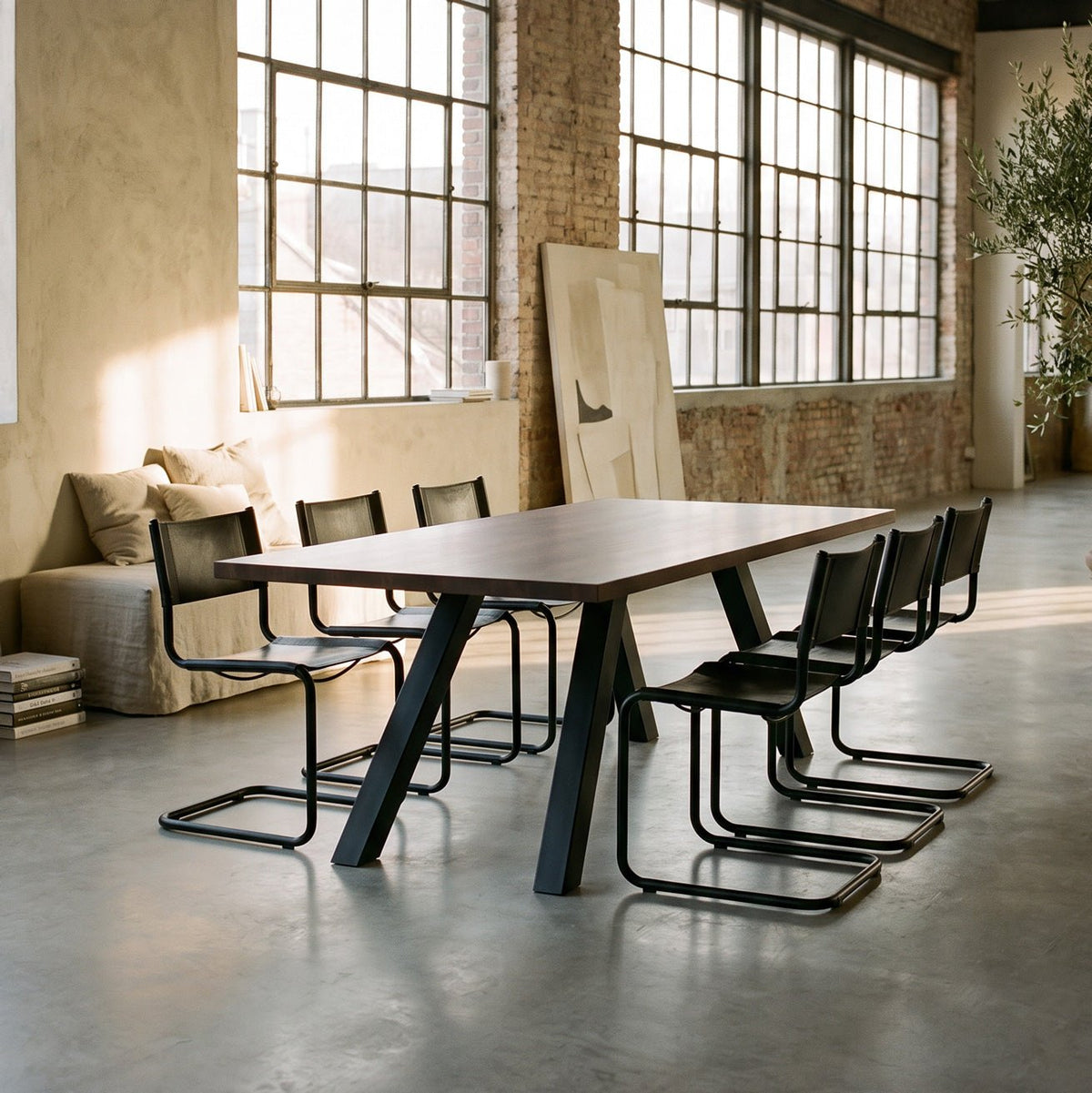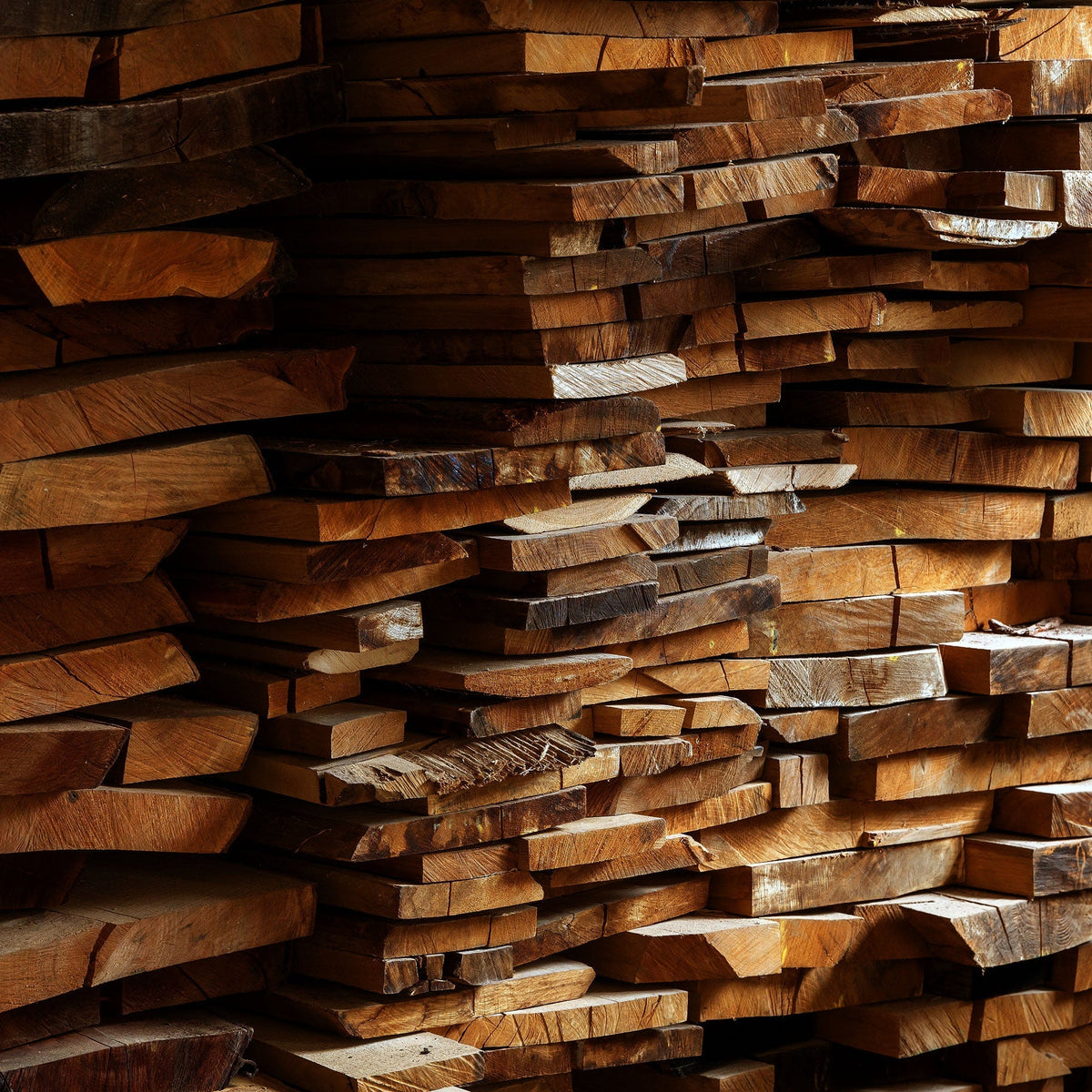
Solid wood is not a trend. It's a choice.
Unlike veneered or coated surfaces, a solid wood table is made entirely of genuine, continuous wood. The grain is not applied but grown. Every structure, every line, every knot is part of the natural history of the tree. This is precisely what makes solid wood unique. And demanding.
Wood works – and that's a good thing
Wood is a living material. It reacts to humidity and temperature. It expands, contracts, and changes minimally over the years. A high-quality table takes this behavior into account in its construction.
Crucial factors are:
- the correct drying of the wood
- expert gluing
- a well-thought-out subconstruction
- and sufficient room for natural movement
If savings are made here, tension, cracks, or warping will occur. If work is precise, a table that remains stable for decades will be created.
Quality begins with the raw material
Not all wood is the same. What matters is:
- uniform, low-stress drying
- careful selection of lamellae
- clean, precise gluing
- controlled surface treatment
High-quality solid wood feels different. It appears calmer, more homogeneous, clearer in its structure. Inferior goods can often be recognized by uneven gluing, visible tension, or poor-quality surfaces.
Naturalness is not a flaw
Small irregularities, fine knots, or minimal color differences are not defects. They are a sign of quality in genuine natural materials. Those who seek absolute uniformity choose industrial surfaces. Those who want character choose solid wood.
A table made of real wood is not a sterile product. It develops a patina over time. It tells stories. It ages gracefully.
Why we at MACERA consciously choose solid wood
A table is the heart of a room. It should not only look good but also have substance. Solid wood offers exactly this substance. It is durable, robust, and repairable. Scratches can be repaired. Surfaces can be refreshed. Those who choose solid wood choose authenticity. For material with character. For quality that you not only see but feel. And that is precisely our claim.